
How tailoring Instagram’s built-in reminders
helped reduce subconscious scrolling
June - September 2023
SUMMARY
As part of my master’s dissertation, I explored reducing mindless scrolling on Instagram. Through a mixed-methods study involving digital tracking, surveys and interviews with Instagram users,
I examined how subconscious usage habits impact well-being and time management.
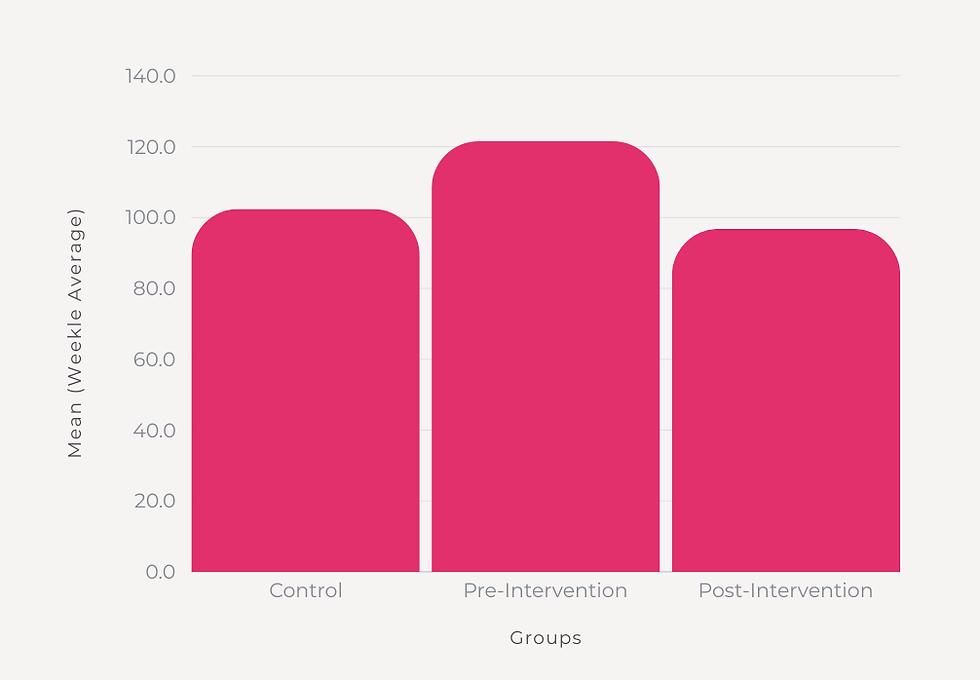
By customising reminder settings to match individual behaviours better, participants reported greater awareness of their scrolling habits and a modest reduction in screen time, from an average of 121.5 to 96.8 minutes per week. This project was driven by a need to reintroduce intentionality into a space dominated by algorithm-driven engagement.
ROLE
I was the sole researcher and designer on this project, with guidance from my supervisor.
TOOLS
Qualtrics, Figma
How might we make Instagram’s reminders more effective
in reducing mindless scrolling?
As part of my dissertation, I was allocated a broad theme focused on how users create boundaries around technology usage. While exploring potential directions, I became particularly interested in the way Instagram encourages habitual, mindless scrolling, especially through its Reels feature and infinite feed design. I noticed this behaviour not only in myself but also widely discussed among peers, prompting me to investigate its emotional, cognitive, and time-related impacts.
The expectation was to conduct a full-scale research project that applied human-centred design methods to a real-world problem. Instagram’s existing built-in reminders were underused or ineffective for many users. This problem was highly relevant, considering the growing concerns around digital addiction and its impact on well-being.

I used The Double Diamond Process...
to ensure I was solving the right problem, not just the obvious one. It helped me explore the broader issue of
mindless scrolling before narrowing down to a focused, behaviour-aligned intervention.
As the sole researcher and designer, I guided the entire process from discovery and definition to ideation and delivery.

1. Discovery (Reseach Phase)
How did I Discover the Instagram Scrolling Dilemma?
Design Features Drive Habit Loops
Research highlighted how features like infinite scroll, autoplay, and personalised algorithms are intentionally designed to keep users engaged. These design patterns reduce the user’s self-regulating ability and lead to subconscious, passive scrolling (Dhir et al., 2018; Rosen et al., 2019).
👉 This insight led me to explore whether Instagram’s own features, specifically built-in reminders could be reframed to interrupt these loops.
Psychological Drivers: FOMO & Dopamine
Studies showed that subconscious scrolling is often reinforced by psychological triggers like the Fear of Missing Out (FOMO) and dopamine-driven reward loops from likes, comments, and notifications (Elhai et al., 2017; Kuss & Griffiths, 2017).
👉 This made me realise that any intervention would need to create a similar, attention-catching moment but one that encouraged reflection rather than reward.
Users Already Try to Self-Regulate
Some users have attempted to manage their screen time using third-party apps or self-imposed rules, but these methods are often inconsistent and short-lived (van Deursen et al., 2015).
👉 This inspired me to explore how Instagram’s existing reminder system could be personalised or better aligned with actual user behaviour, rather than requiring external tools.
Awareness Leads to Behaviour Change
Literature emphasised that interventions that promote awareness, such as screen time trackers, mindful notifications, or moment-of-reflection prompts, can help users reduce usage and improve well-being (Gonzales & Hancock, 2011; Lindqvist et al., 2016).
👉 This reinforced my decision to focus the intervention on surfacing usage awareness at the right time.
Let's find out how effective the existing features on Instagram are!
To understand how users perceived their own Instagram habits, I conducted a mixed-methods research design, employing quantitative and qualitative techniques to collect and analyse data. My goal was to gather baseline insights on usage patterns, emotional responses, and users' existing awareness of their scrolling behaviour.

Why did I choose this Method?
The mixed-method approach was chosen to provide a comprehensive understanding of Instagram usage by combining quantitative data on screen time with qualitative insights into user experiences. This method allowed for a more in-depth analysis of how the intervention affected both behaviour and perceptions, ensuring that the results were not only statistically valid but also reflective of personal experiences and motivations.
The quantitative data indicated a 30% reduction in use following the intervention, which provides a clear and measurable outcome of the intervention’s effectiveness.
However, this data on its own does not explain why participants reduced their usage or how they felt about it. This is where the qualitative data becomes invaluable.
For the Qualitative analysis, I performed a thematic study on interview transcripts to identify patterns and insights regarding the intervention’s impact on scrolling behaviour. Themes were generated through both inductive and deductive approaches, where inductive themes emerged naturally from the data, and deductive themes were based on predefined study criteria. The themes that were identified were:
Theme 1 - Realization, Guilt, and Awareness of Time Spent
"Yeah, it shows me how much time I'm losing in a day, I think it just made me feel guilty and then I just switched on to another app." - User 1

Theme 2 - Emotional and Behavioral Response
"For me, I use Instagram when I'm sleeping. Before sleeping, basically. Yeah, it has become a habit. And sometimes I'm just scrolling, going through everything and I forget it's time to sleep." - User 2

Theme 3 - Intervention Efficiency
"So basically it's like the thing with the pop-up is that you can directly just cut off the pop-up and start it again. I would have to disagree with that because even if I really wanted to use the app, I would still continue using it." - User 3

Theme 4 - Barriers and Techniques
"I just deactivated my account and then focused on work, So it's a possibility I get activated back and yeah, so I completely delete it." - User 4

The most important learning was that while the reminders were simple, they often created moments of guilt or realisation, leading users to reconsider their scrolling, even if temporarily. Several users mentioned they hadn’t realised how much time they were losing until the reminders made it visible. Some even became more selective with the content they engaged with.
These insights validated the emotional power of awareness and helped me understand that subtle, well-timed prompts could be more effective than strict time limits. It reinforced my decision to work with existing in-app features and inspired ideas for optimising timing and tone for better impact.

2. Define (Synthesis phase)
Finding the right problem to solve...
The primary problem I identified was the lack of timely, personalised disruption in the scrolling experience, despite Instagram offering built-in reminder features. These features were often ignored or misaligned with actual user behaviour, rendering them ineffective. Rather than pursuing entirely new tools, I chose to investigate how existing features could be better aligned with real-time behavior to encourage moments of self-awareness.
I made this decision independently, with methodological guidance from my supervisor. I arrived at the problem definition by synthesising literature insights and validating them through a post-intervention interview, which showed that most users underestimated their screen time and felt a lack of control over their scrolling habits. This confirmed that awareness was both a pain point and an opportunity for intervention.

3. Devolop (Ideation phase)
Narrowing down to the best Solutions...
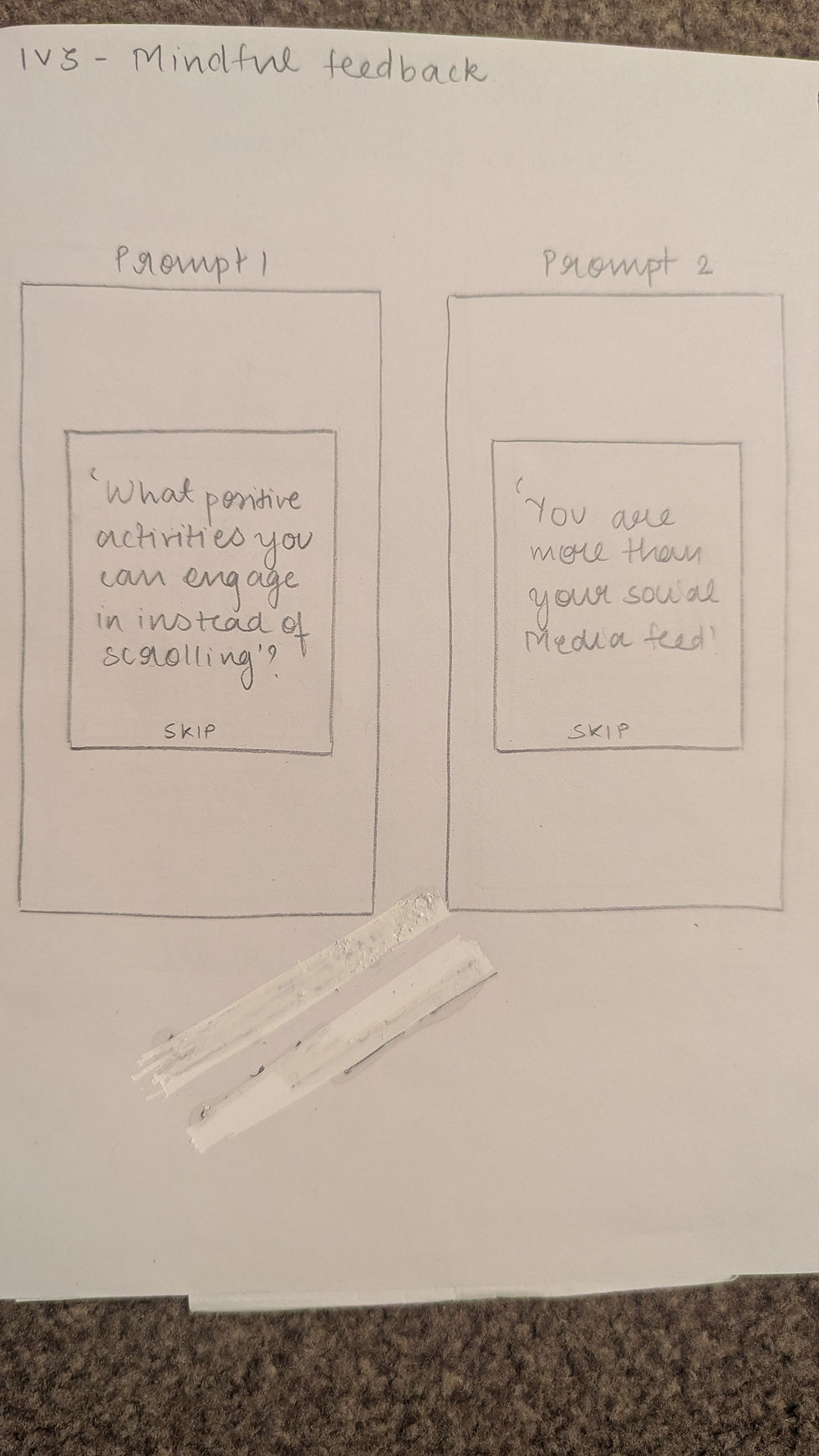
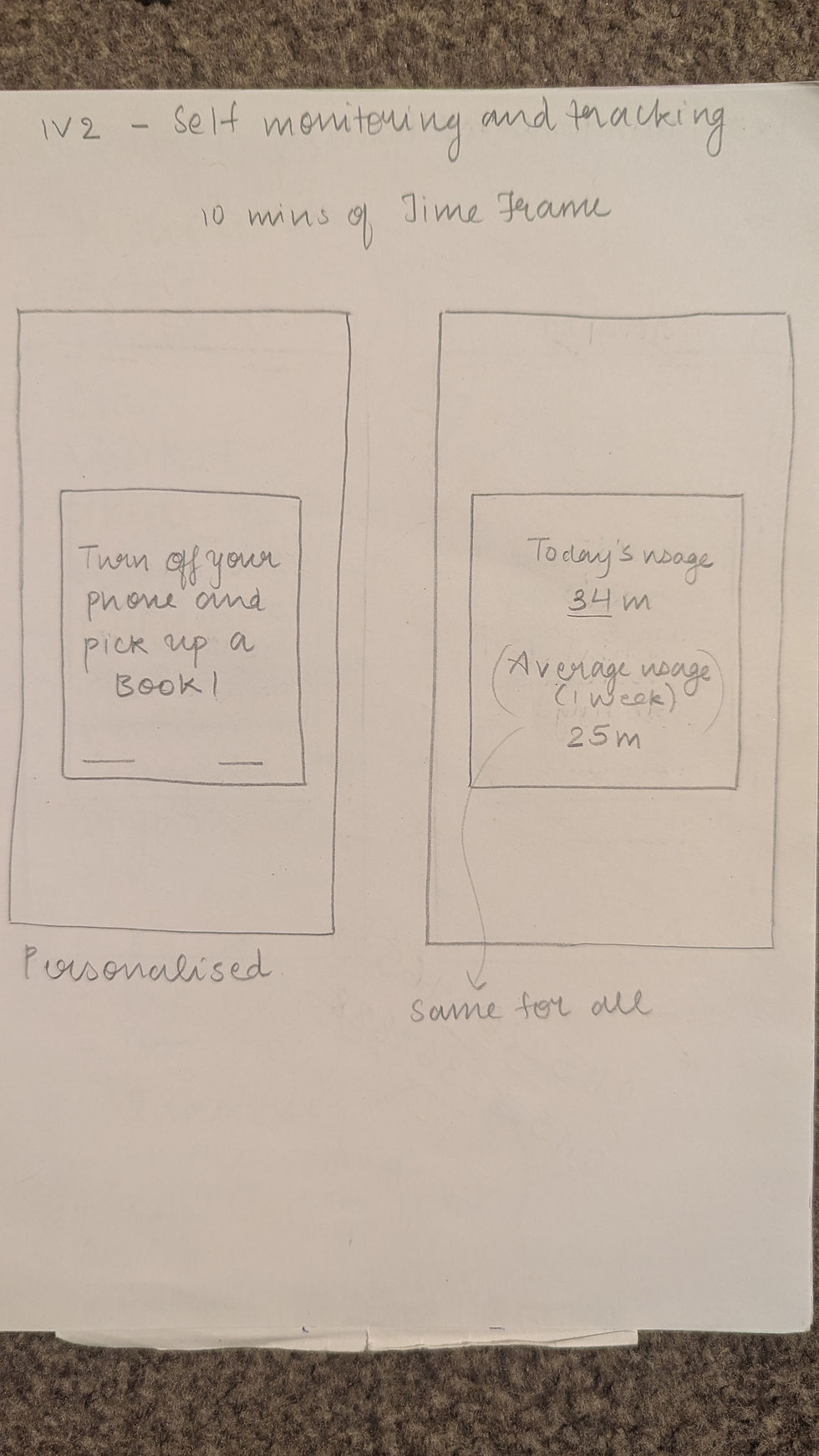
I initially focused on making reminders less generic and more personalised to avoid repetition and fatigue. The existing concepts included basic prompts like "Time to close" or "Take a break," but they lacked emotional connection and context awareness.
To improve this, I sought feedback from peers and informal usability walkthroughs. The feedback consistently highlighted the need for more engaging, positive, and varied messaging, rather than just a blunt screen time alert.
SERVICES
COMMERCIAL
SERVICES
INDUSTRIAL
SERVICES
RESIDENTIAL
3. Deliver (Implementation phase)
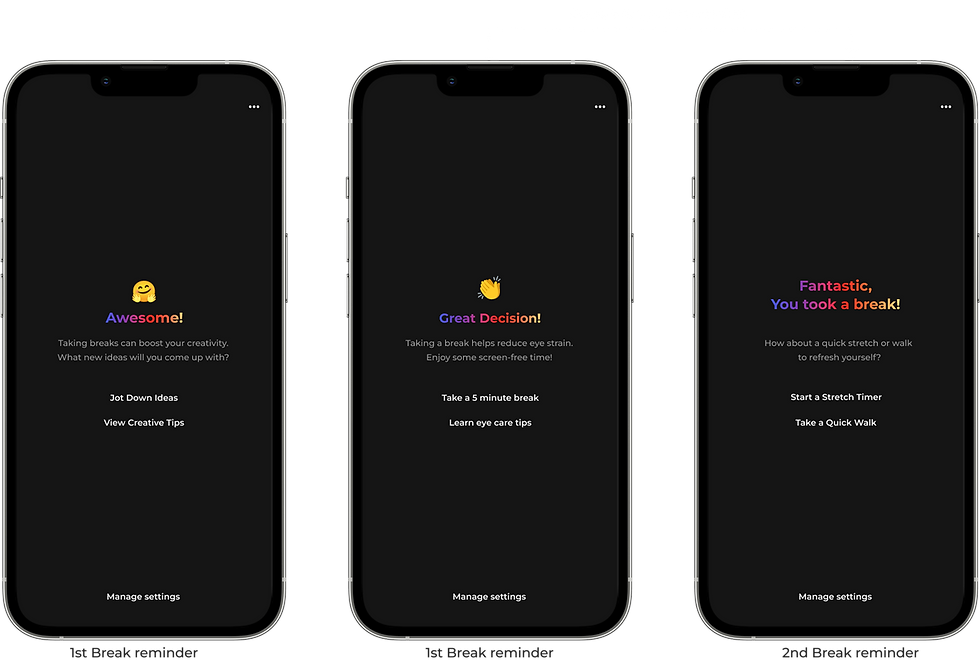
The design delivery phase was a self-initiated extension beyond the formal scope of my dissertation. I used the findings to explore potential solutions through rough wireframes and high-fidelity mockups. My goal was to design interventions that were more personalized, engaging, and emotionally supportive.
#Psychological insight
The smaller a task appears, the easier it is to perform, by James Clear in Atomic Habits. By offering users simple, actionable steps such as taking a 5-minute break or extending their time by just 10 minutes, these small, easily actionable tasks reduce friction, making users more likely to engage with the reminder rather than dismiss it.

Awareness: Progress Bar helps users visualize their screen time usage, making the abstract concept of time more tangible. Customizable Options offer users the flexibility to take a break or extend their time, giving them a sense of control over their app usage.
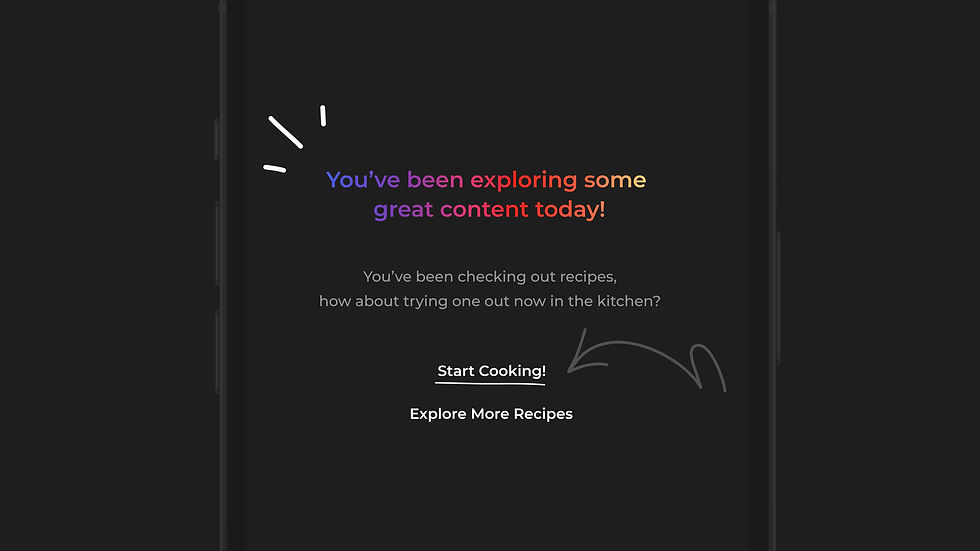
Personalisation: Tying the prompts to users' interests (like recipes or the time of day) makes the reminder feel more relevant and engaging. Actionable Options offering direct actions like "Start Cooking" or "Time to Rest" encourages users to break from scrolling in favor of meaningful activities.
Metrics for Success: Aligning User Needs with Business Objectives
Retention rate ≠ Reduction in screen time: This seemed like the real challenge here.
Interventions like break reminders and time limits could potentially reduce time spent on the app, conflicting with business objectives focused on maximising user engagement. The goal is to promote mindful engagement and healthier digital habits. By promoting healthier usage patterns, Instagram can position itself as a responsible platform that values user well-being, leading to increased trust, loyalty, and long-term user retention.
#Long-term Goal
#Short-term Goal
Shifts in Usage Patterns
Encouraging quality interaction can satisfy user needs while still aligning with the business goals of keeping users active on the platform.
How to Measure
Use engagement metrics to track the quality
of interactions, such as time spent on valuable content (e.g., grabbing useful information, productive use) versus mindless scrolling, and analyze whether users are spending their time more intentionally.
Sustained Behavioural Change
Evaluate if users maintain healthier scrolling habits over time, indicating that the interventions are effective.
How to Measure
Compare pre- and post-intervention data to assess long-term shifts in user behaviour, such as more frequent breaks or reduced overall scrolling over a sustained period.
Finally, my top learnings...
Balancing Engagement with Well-being
This experience helped me appreciate the importance of balancing user retention with promoting a healthier relationship with technology.
Feasibility and context matter just as much as Innovation
This means improving retention, satisfaction, and brand trust for businesses without a major product overhaul.
Deep Behavioral Understanding
By exploring the psychological triggers, such as Fear of Missing Out (FOMO), that drive user behaviour, I sharpened my ability to conduct thorough user research and behaviour analysis.